What is a 172nm excimer lamp and how does it work?
Jul 08, 2026
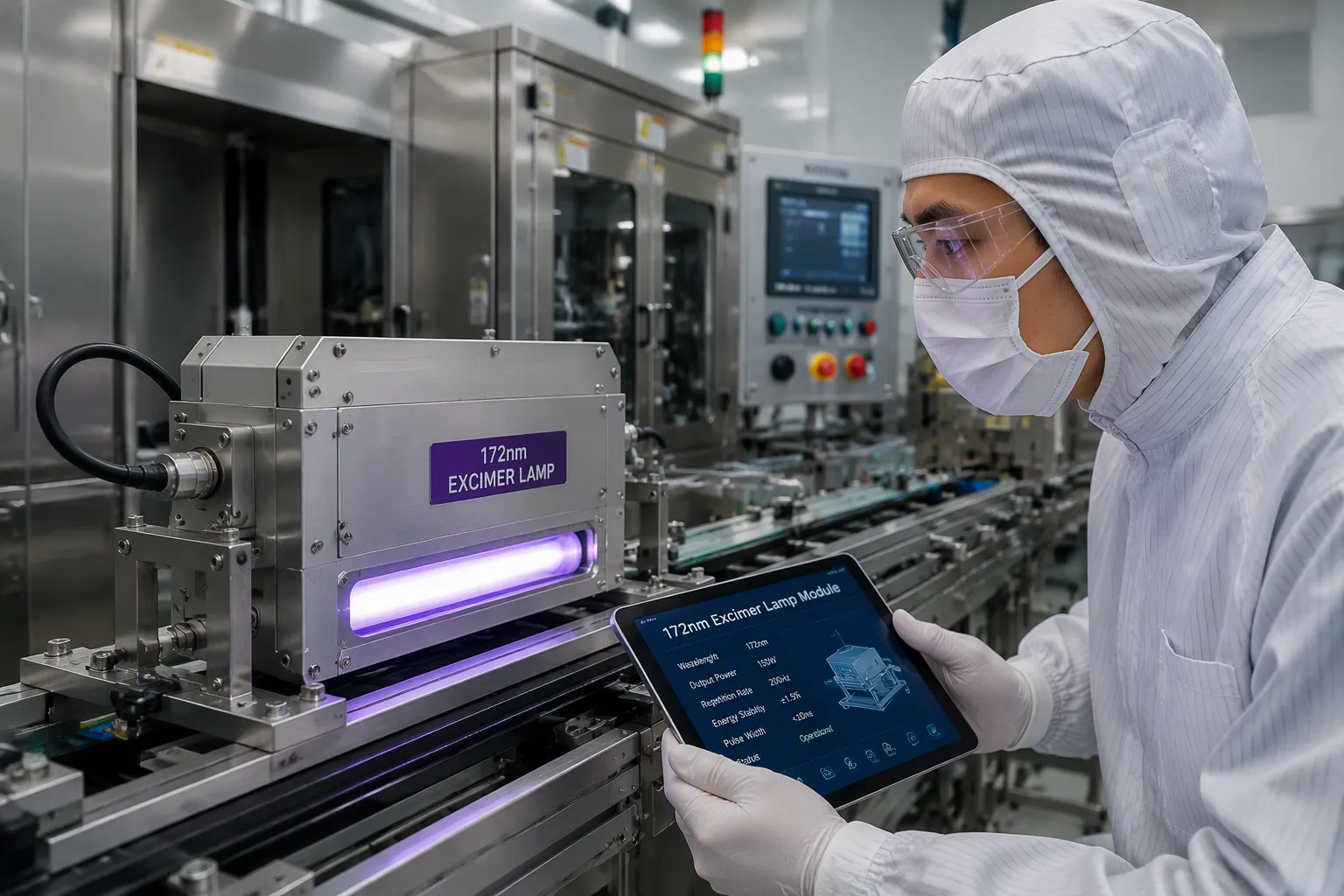
You encounter the 172nm excimer lamp as a powerful VUV light source. This lamp delivers a unique 172nm wavelength, ideal for advanced industrial processes. You benefit from its mercury-free design and compact structure. GMY, a leading manufacturer, produces excimer lamps with high efficiency and a 350W-1000W power range.
172nm excimer lamp shortens curing time.
172nm excimer lamp enhances surface modification effects.
172nm excimer lamp avoids mercury hazards.
172nm excimer lamp supports industrial applications.
172nm excimer lamp offers reliable performance.
Key Takeaways
The 172nm excimer lamp offers a powerful, mercury-free light source ideal for industrial processes.
This lamp significantly shortens curing time and enhances surface modification, making it efficient for various applications.
GMY provides a range of excimer lamps, including compact options for specialized equipment, ensuring versatility in use.
172nm Excimer Lamp Structure
Lamp Design and Materials
You notice that the 172nm Excimer Lamp stands out because of its mercury-free design. This feature makes the lamp safer for you and the environment. The lamp uses high-quality quartz glass and specialized ceramics. These materials withstand intense uv radiation and high temperatures. You benefit from a compact size and lightweight structure. These features allow you to use the lamp in flexible equipment designs and smaller devices. GMY offers a wide range of excimer lamps, including the 172nm Excimer Module and the 172nm Mini Excimer Lamp Module. You can select the right lamp for your application, whether you need high power or a mini module for tight spaces.
GMY’s manufacturing expertise ensures you receive reliable excimer lamps with consistent uv output and long service life.
Feature
Benefit
Compact Size
Flexible equipment design and downsizing
Lightweight Design
Easier integration into various applications
Eco-friendly
No mercury, reduced environmental impact
Gas Mixture and Electrodes
You find that the excimer lamp uses a special gas mixture. This mixture often includes xenon or krypton. When you apply an electrical pulse to the lamp’s electrodes, the gas forms excimer molecules. These molecules emit uv light at 172nm. The electrodes use durable metals to handle repeated electrical pulses. You experience stable uv output and efficient excimer formation. The lamp’s structure supports rapid uv emission, making it ideal for industrial processes. GMY’s excimer lamps deliver high performance and meet strict quality standards.
How Excimer Lamps Work
Excimer Formation
You discover that excimer lamps use a unique process to generate intense vuv light. When you activate the lamp, you apply an electrical pulse to the electrodes. The gas mixture inside the lamp, often xenon or krypton, responds to this energy. The atoms in the gas form excimer molecules. These molecules exist only in an excited state. You notice that excimer molecules do not form stable bonds in their ground state. They release energy quickly and return to their original atomic form.
You benefit from this rapid excimer formation. The process produces a strong burst of vuv light. The 172 nm excimer molecules emit photons at the 172 nm wavelength. This emission gives you access to high-energy uv light. You use excimer lamps for applications that require precise and powerful uv exposure. The excimer process stands out because it does not rely on mercury or traditional filament heating.
Excimer formation allows you to achieve high-speed surface modification and efficient curing in industrial settings.
UV Emission Process
You experience the excimer uv lamps emitting vuv light through a direct energy release. When excimer molecules return to their ground state, they emit photons at the 172 nm wavelength. This emission process delivers high photon energy. You use this energy to break chemical bonds in polymers and activate surfaces. The lamp produces a narrow-band vuv output, which gives you precise control over your curing and surface treatment processes.
You compare excimer lamps with traditional ultraviolet lamps. Excimer lamps offer several advantages:
You achieve faster cross-linking in uv-curable formulations.
You break polymer bonds directly, which improves curing speed.
You enhance surface energy for better adhesion and hydrophilicity.
The table below highlights the differences between excimer emission at 172nm and traditional UV curing:
Feature
Excimer Emission at 172nm
Traditional UV Curing
Wavelength
172 nm
Wide-band UV
Bond Breaking Capability
Directly breaks polymer bonds
Limited bond breaking
Cross-linking Speed
High-speed
Slower
Photon Energy
Higher
Lower
Applications
TOC reduction, surface energy enhancement
General curing
You realize that excimer lamps provide you with high-speed curing and advanced surface modification. You use them for TOC reduction, surface energy enhancement, and rapid industrial processing. The vuv output from excimer lamps gives you results that traditional UV sources cannot match.
You select excimer lamps for demanding applications where precision and speed matter. You rely on the unique properties of excimer emission to achieve superior performance.
You find that GMY offers a range of excimer lamps, including the 172nm Excimer Lamp, the 172nm Excimer Module, and the 172nm Mini Excimer Lamp Module. You choose the right lamp for your needs, whether you require high power or a compact module for specialized equipment.
Excimer Lamp Curing and Applications
Industrial Photocuring
You use excimer lamps for rapid and precise industrial photocuring. The excimer lamp curing process initiates high-speed crosslinking reactions. This speed surpasses traditional wide-band uv curing technologies. You see enhanced surface hardness and scratch resistance on materials like acrylate coatings. Excimer lamps deliver a focused 172nm uv output, which directly breaks chemical bonds in acrylate polymers. You benefit from this efficiency in many industries:
Specialty coating and structural bonding processes
High-precision graphic printing
High-speed inkjet printing
3D printing
Packaging printing industry
You select the 172nm Excimer Lamp or the 172nm Excimer Module for these applications. These excimer lamps provide consistent uv energy, making them ideal for acrylate curing and surface modification.
Medical and Dental Uses
You rely on excimer lamps for advanced medical and dental treatments. The 172nm wavelength offers strong germicidal effectiveness and supports uvc disinfection. You use excimer lamp curing to harden dental acrylate fillings quickly. The excimer lamps also activate surfaces for better bonding of dental materials. You choose the 172nm Mini Excimer Lamp Module for compact medical devices. This lamp fits easily into handheld tools and delivers precise uv exposure.
Environmental Photocatalysis
You apply excimer lamps in environmental photocatalysis to degrade pollutants. The high-energy uv output at 172nm activates photocatalysts that break down organic contaminants. You use excimer lamp curing to treat water and air, reducing harmful substances. Acrylate-based membranes benefit from surface activation, improving filtration performance. GMY offers excimer lamps for environmental systems, ensuring reliable operation in demanding conditions.
You trust GMY’s excimer lamps for industrial, medical, and environmental solutions. Their products help you achieve rapid curing, effective disinfection, and efficient pollutant degradation.
You gain high-energy UV output with the 172nm Excimer Lamp.
You avoid mercury hazards and enjoy eco-friendly technology.
You use the 172nm Excimer Module and 172nm Mini Excimer Lamp Module for diverse applications.
GMY provides reliable excimer lamp solutions for your industrial, medical, and environmental needs.
FAQ
What makes the 172nm Excimer Lamp safer than traditional UV lamps?
You avoid mercury exposure because the 172nm Excimer Lamp uses a mercury-free design. This feature makes it safer for you and the environment.
Can you use the 172nm Excimer Module for small devices?
Yes, you can choose the 172nm Mini Excimer Lamp Module for compact equipment. It fits easily into handheld or portable devices.
Which industries benefit most from excimer lamp technology?
You see the 172nm Excimer Lamp used in printing, medical sterilization, and environmental purification. The 172nm Excimer Module supports rapid curing and surface activation in many industries.