Precision Surface Engineering with 172nm Excimer Lamps: Principles, Industrial Use, and Buyer’s Guide
Sep 09, 2026
Modern industrial manufacturing demands higher precision, lower thermal budgets, and environmentally sustainable processing techniques. As microelectronics shrink, optical displays become more flexible, and medical devices require stricter biocompatibility, conventional wet chemical etching and high-heat thermal treatments often fall short.
The 172nm excimer lamp has emerged as a critical vacuum ultraviolet (VUV) light source across advanced manufacturing. By operating at a quasi-monochromatic wavelength of 172 nanometers, these lamps deliver high-energy photons capable of breaking molecular bonds directly without thermal degradation.
1. Operating Principles of the 172nm Excimer Lamp
To understand why a 172nm excimer lamp delivers such consistent results across sensitive substrates, it is essential to evaluate its underlying physics: dielectric barrier discharge (DBD) and high-energy photon generation.
Dielectric Barrier Discharge and Xenon Chemistry
Unlike conventional medium-pressure or low-pressure mercury discharge lamps, excimer (excited dimer) lamps do not use an electrode arc in direct contact with the gas mixture. Instead, they rely on a dielectric barrier—typically high-purity synthetic quartz—separating the discharge electrodes from a rare gas filling.
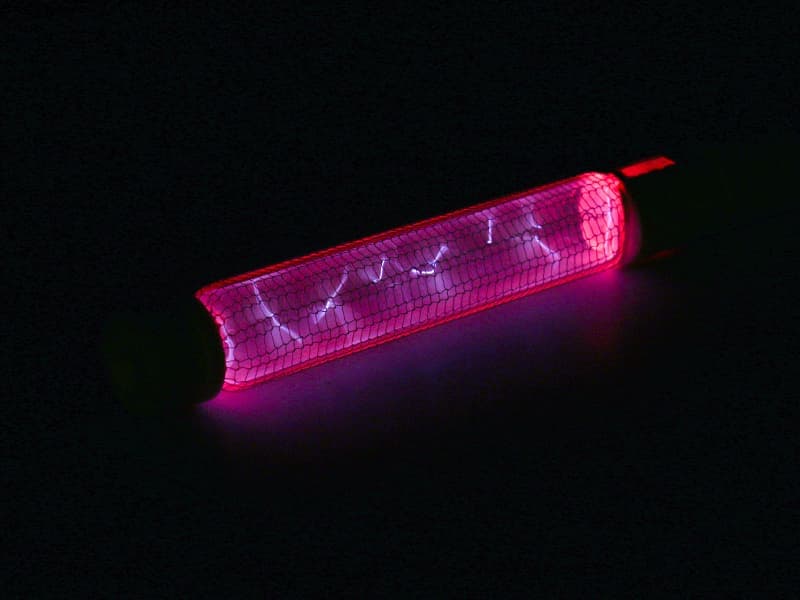
Inside a 172nm excimer lamp, the chamber is filled with pure xenon gas (Xe). When an alternating high-voltage, high-frequency electrical field is applied across the dielectric barrier, a non-equilibrium cold plasma forms. Xenon atoms are excited and collide with neutral ground-state xenon atoms to create transient excimer molecules (Xe₂*):
Xe* + Xe + M → Xe₂* + M
Because the ground state of an excimer molecule is weakly repulsive, the molecule rapidly dissociates (within nanoseconds), releasing a photon at a narrow spectral peak centered precisely at 172 nm:
Xe₂* → 2Xe + hν (172 nm)
The Energy Advantage of Vacuum Ultraviolet Photons
A wavelength of 172 nm falls squarely within the vacuum ultraviolet spectrum. The energy carried by a single photon is inversely proportional to its wavelength, calculated by the Planck-Einstein relation:
E = hc / λ ≈ 7.2 eV
A single 172 nm photon delivers approximately 7.2 electron volts (eV) of energy (roughly 696 kJ/mol). This exceeds the binding energies of most covalent chemical bonds found in organic matter and industrial polymers:
Carbon-Hydrogen (C-H): ≈ 4.3 eV (413 kJ/mol)
Carbon-Carbon (C-C): ≈ 3.6 eV (347 kJ/mol)
Carbon-Oxygen (C-O): ≈ 3.7 eV (358 kJ/mol)
Silicon-Carbon (Si-C): ≈ 3.3 eV (318 kJ/mol)
Because the photon energy exceeds these dissociation thresholds, the 172nm excimer lamp initiates direct photolysis. Substrate bonds break instantaneously without requiring the material to absorb thermal energy, making it an ideal "cold" process.
2. Core Mechanisms: Photolysis and Reactive Oxygen Species
The processing power of a 172nm excimer lamp relies on two concurrent actions: direct molecular bond breaking and the simultaneous generation of aggressive reactive species.
172nm VUV Photons (7.2 eV)
/ \
/ \
Direct Bond Cleavage Ambient Oxygen Absorption
(C-C, C-H, C-O break) (O₂ + hν → O(¹D) + O(³P))
\ /
\ /
Active Radical Sites
↓
Functional Hydrophilic Layer
(-OH, -COOH, -CHO groups)
Direct Photolysis of Contaminants: Trace organic residues, processing oils, photoresist leftovers, and release agents on the substrate absorb 172nm radiation strongly. The VUV photons snap the polymer backbone, converting heavy macromolecules into smaller volatile fragments.
Singlet Oxygen and Ozone Generation: In the presence of ambient or controlled oxygen (O₂), 172nm photons are intensely absorbed. This breaks the molecular oxygen bond to yield ground-state atomic oxygen (O(³P)) and excited-state singlet oxygen (O(¹D)). These radicals react with oxygen to form ozone (O₃).
Oxidative Desorption: The atomic oxygen and ozone react with the cleaved hydrocarbon fragments, oxidizing them into benign, volatile byproducts such as carbon dioxide (CO₂), water vapor (H₂O), and trace nitrogen oxides (NOₓ), which are swept away by local exhaust ventilation.
Surface Functionalization: On clean base materials (such as polyimide, PET, or glass), the broken bonds leave free surface radicals. These instantly bond with oxygen and ambient moisture to create polar, hydrophilic functional groups such as hydroxyl (-OH), carboxyl (-COOH), and carbonyl (-C=O). This drastically reduces the water contact angle and elevates surface free energy.
3. Key Industrial Applications
The combination of dry photochemical cleaning, a zero-mercury footprint, and low process temperatures makes the 172nm excimer lamp essential across several high-precision sectors.
Industry
Primary Functional Role
Semiconductor & Wafers
Atomic-scale residue stripping, organic degassing, pre-bond
Flat Panel Displays
Polyimide cleaning, micro-LED wettability, anti-glare cure
Precision Optics
Non-contact optical substrate de-oiling, coating prep
Medical Polymers
Microfluidic bonding, hydrophilic catheter functionalization
Industrial Coatings
Ultra-matte excimer curing, scratch-resistant texturing
Semiconductor and Advanced Packaging
In wafer processing, wire bonding, and wafer-to-wafer direct bonding, atomic-scale interface cleanliness dictates final yield. Residues left behind by chemical-mechanical planarization (CMP) slurries or organic solvents compromise bond strength and introduce structural voids.
Using a 172nm excimer lamp allows fabs to clean silicon wafers, silicon carbide (SiC), and gallium nitride (GaN) wafers without the physical abrasion of scrubbers or the environmental hazards of wet solvent benches.
Flat Panel Displays and Flexible Electronics
Display manufacturing—including OLED, QLED, and micro-LED lines—relies on ultra-clean thin-film transistors (TFTs) and uniform surface tension across large glass and polyimide sheets.
A 172nm system increases surface wettability, enabling optical adhesives, coatings, and inkjet-printed quantum dots to wet out uniformly without pinholes or edge dewetting.
Because the process generates virtually zero radiant infrared heat, ultra-thin polymer substrates (such as 10 μm to 25 μm polyimide films) remain mechanically stable without curling or warping.
Industrial Coatings and Excimer Matting
In high-end automotive interior trim, architectural flooring, and specialty foils, manufacturers often require deep-matte, soft-touch, yet scratch-resistant finishes.
When applied to specialized UV-curable acrylate coatings, the shallow penetration depth of 172nm VUV light initiates rapid polymerization of only the top few tens of nanometers of the wet resin.
This microscopic top skin shrinks and micro-folds while the underlying resin remains fluid.
Subsequent exposure to longer-wavelength UV sources (such as 365nm or 395nm UV LEDs) cures the bulk layer beneath, locking the micro-folded texture in place. This delivers a uniform physical matting effect without requiring chemical silica matting agents, yielding superior anti-fingerprint and scratch-resistant properties.
Medical Device Manufacturing
Medical components such as catheters, microfluidic chips, and diagnostic cassettes frequently utilize inert engineering plastics (like cyclic olefin copolymers, PEEK, or PTFE). These plastics have low surface energy, making them difficult to print, coat, or bond with medical-grade adhesives.
VUV treatment with a 172nm excimer lamp functionalizes these inert plastics rapidly, yielding robust hydrophilic properties that pass stringent peel tests and maintain bond integrity without introducing toxic chemical primers.
4. Comparing 172nm Excimer Technology to Alternative Methods
Engineers evaluating surface treatment techniques often balance excimer technology against traditional low-pressure mercury lamps, atmospheric plasma, and corona discharge.
Parameter
172nm Excimer Lamp
Low-Pressure Hg UV
Atmospheric Plasma
Primary Mechanism
VUV Photolysis
Photochemical / O₃
Ion Bombardment
Dominant Wavelength
172 nm (Quasi-mono)
185 nm / 254 nm
Broad / Thermal RF
Thermal Load
Extremely low
Moderate to High
Moderate
Surface Uniformity
Exceptionally high
High
Variable / Jet-dep
Mercury Content
100% Mercury-Free
Contains Mercury
Mercury-Free
Warm-Up Time
Instant on/off
3 to 10 minutes
Instant
Substrate Damage
Zero static/charge
None
Potential ESD risk
172nm Excimer vs. Low-Pressure Mercury Lamps
Low-pressure mercury lamps emit primarily at 254 nm and 185 nm. While the 185 nm line generates ozone, its photon energy (6.7 eV) is lower than that of 172 nm (7.2 eV), leading to significantly slower bond-cleavage rates on refractory organics.
Furthermore, mercury lamps emit considerable infrared heat and broad-spectrum energy, raising substrate temperatures. Mercury lamps also require long warm-up and restrike cycles, whereas dielectric barrier discharge excimer lamps turn on and off instantly.
From an environmental and regulatory standpoint, global initiatives such as the Minamata Convention on Mercury continue to restrict mercury usage, driving manufacturers toward mercury-free excimer configurations.
172nm Excimer vs. Atmospheric Plasma and Corona
Atmospheric plasma and corona discharge treat surfaces via accelerated ions, electrons, and reactive gas jets. While cost-effective for coarse packaging films, plasma and corona methods exhibit limitations on delicate parts:
Micro-Arcing and ESD: Plasma poses an electrostatic discharge (ESD) risk to sensitive microelectronics, integrated circuits, and active TFT layers. A 172nm excimer lamp works strictly through non-ionizing optical radiation, eliminating electrical charge accumulation.
Surface Pitting: The kinetic impact of ions in atmospheric plasma torches can physically erode or pit ultra-smooth optical surfaces. 172nm photolysis leaves the underlying physical morphology completely unaltered down to sub-nanometer roughness.
Uniformity over Wide Areas: Corona and plasma jets suffer from uneven nozzle wear and aerodynamic boundary layer variations across wide webs. Excimer tubular lamps deliver uniform photon flux across broad substrate widths.
5. Engineering and Integration Guide for B2B Buyers
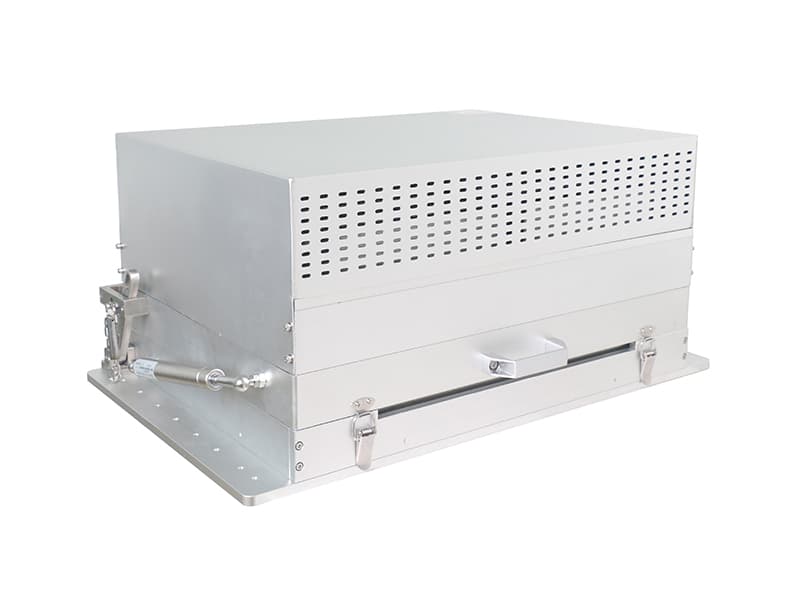
Integrating a 172nm excimer lamp into an automated roll-to-roll line, cleanroom conveyor, or indexing station requires careful attention to optical path mechanics, thermal management, and safety protocols.
Controlling the Process Atmosphere (Nitrogen Purging)
Atmospheric air contains approximately 21% molecular oxygen. Because 172nm photons are strongly absorbed by oxygen, VUV light attenuates over short travel distances in standard air:
Transmission: I = I₀ × e^(-αpx)
To prevent premature photon loss before the light strikes the target substrate, the optical path must be enclosed and purged with high-purity industrial nitrogen (N₂).
Maintaining an oxygen concentration between 10 ppm and 500 ppm in the working gap allows maximum VUV energy to strike the substrate while retaining just enough trace oxygen to produce functional singlet oxygen.
The gap distance between the lamp quartz face and the substrate is typically engineered between 1 mm and 5 mm to minimize purge volume and maximize photon flux.
Lamp Geometries and Integration
Depending on the production format, industrial excimer systems utilize distinct physical configurations:
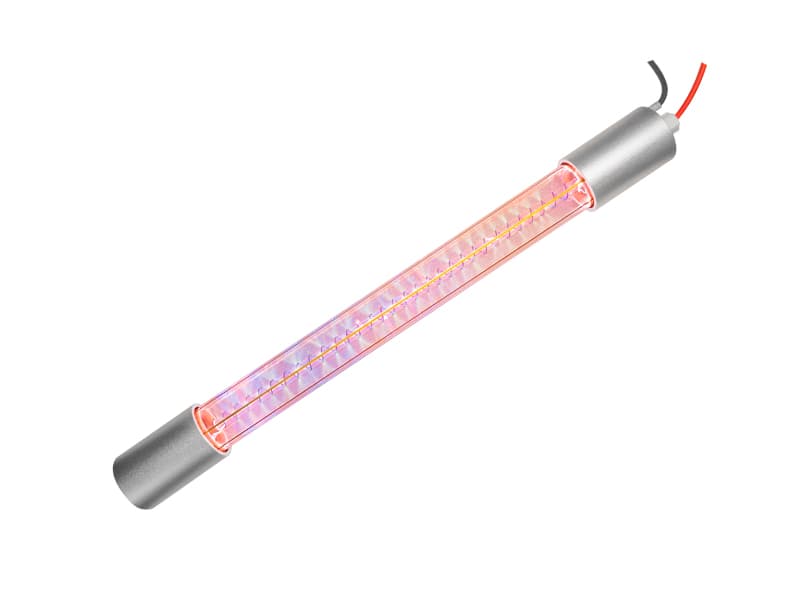
Linear Tubular Lamps: These provide continuous, uniform exposure zones across web widths spanning from 100 mm to over 2,000 mm, making them standard for roll-to-roll film lines, wide glass cleaning, and continuous sheet lines.
Flat Panel/Planar Configurations: Planar excimer configurations provide wide, uniform two-dimensional irradiation for static chamber batch processing, wafer chucks, and microfluidic plate bonding.
Thermal Dissipation and Power Supply Matching
Although excimer discharge is inherently cold, the electrical efficiency of VUV generation results in a portion of input power converting into ambient quartz heating.
System builders must match the excimer lamp with a dedicated high-frequency, high-voltage resonant inverter power supply.
Controlled cooling—via filtered laminar nitrogen flow, dry clean air (CDA) shrouds, or integrated water-cooled electrode blocks—ensures stable operating temperatures and protects the quartz dielectric seal, extending lamp life beyond 3,000 to 5,000 operating hours.
6. Sourcing Industrial Optical Solutions from GMY
Selecting the right light source requires pairing component specifications with production line mechanics. Industrial sourcing teams must verify electrical matching, spectral emission purity, and quartz material standards to avoid mid-run process variations.
For technical teams seeking reliable VUV integration, GMY develops professional lighting and industrial optical solutions engineered to rigorous industrial tolerances. GMY provides comprehensive design support, helping systems integrators and factory managers deploy lighting configurations that match their exact dimensional constraints and throughput targets.
By visiting www.gmyok.com, process engineers and procurement specialists can access detailed product data, explore industrial lighting portfolios, and discuss specialized OEM/ODM manufacturing requirements directly with technical experts.
Frequently Asked Questions (FAQ)
What is the typical service life of an industrial 172nm excimer lamp?
Industrial 172nm excimer lamps typically offer an operating lifespan between 3,000 and 5,000 hours, depending on operating duty cycles, electrical frequency matching, and thermal management. Because there are no internal metal filaments or electrodes to sputter onto the quartz envelope, excimer lamps deliver superior lumen maintenance and slower output decay compared to mercury arc lamps.
Why is nitrogen purging necessary when operating a 172nm excimer lamp?
Photons at 172 nm are readily absorbed by standard atmospheric oxygen. If operated in ambient room air, the VUV energy is completely absorbed within a few millimeters, converting the oxygen to ozone without reaching the target surface. Purging the chamber with industrial nitrogen allows the VUV photons to travel efficiently to the substrate while precisely metering the reactive species generated at the boundary layer.
Does 172nm treatment damage delicate thin films or transparent conductive oxides (TCO)?
Because 172nm treatment relies on photochemical bond cleavage rather than physical ion bombardment or intense heat, it preserves the physical topography and bulk crystalline properties of the material. When calibrated to the appropriate line speed and dosage, it cleans and functionalizes transparent conductive layers (such as ITO or silver nanowires) without causing optical hazing, thermal deformation, or resistivity spikes.
How do operators manage ozone generated during 172nm excimer operation?
Any exhaust containing residual ozone from the process chamber must be routed through a dedicated industrial ozone decomposer. These systems typically utilize thermal destruct units or manganese dioxide/copper oxide catalytic filters to safely break ozone (O₃) back down into standard molecular oxygen (O₂) prior to facility exhaust discharge.
Advance Your Precision Surface Treatment Line
Whether retrofitting an existing display production line, enhancing wafer-bonding adhesion, or developing next-generation ultra-matte industrial coatings, incorporating a high-performance 172nm excimer lamp provides non-destructive, mercury-free, cold-surface processing.
Visit GMY today to explore industrial light source configurations, request technical specifications, and connect with optical engineers ready to support your manufacturing goals.
Explore GMY 172nm Excimer Lamp Solutions