

Are 222nm Excimer Lamps the Future of Safe Disinfection

As businesses, healthcare facilities, and public institutions look for more effective ways to control airborne and surface contamination, ultraviolet disinfection technology is gaining renewed attention. However, traditional UV-C systems have an important limitation: direct exposure to conventional germicidal UV light can damage human skin and eyes, meaning many systems must operate in unoccupied spaces.
This is where 222nm excimer lamps are attracting interest. Using Far-UVC technology, these lamps offer a different approach to microbial inactivation, with the potential to support continuous disinfection in occupied environments when properly filtered, designed, and installed.
So, are 222nm excimer lamps the future of safe disinfection? The technology has considerable potential, particularly for healthcare, education, transportation, and commercial environments. But its long-term success depends on more than wavelength alone. Optical filtering, exposure management, product quality, and real-world performance all play important roles.
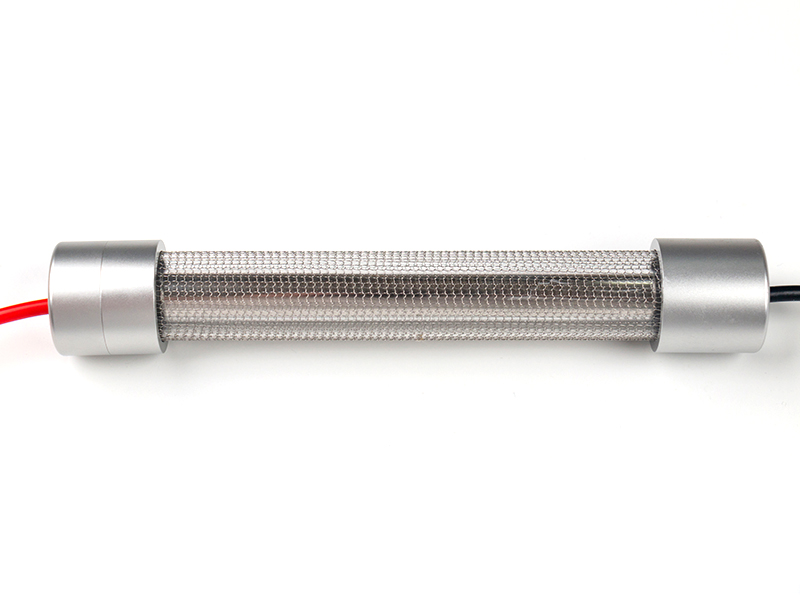
222nm Far-UVC excimer lamp technology for modern disinfection systems.
What Is a 222nm Excimer Lamp?
A 222nm excimer lamp is a type of ultraviolet light source that produces Far-UVC radiation at a wavelength of approximately 222 nanometers. It commonly uses a krypton-chloride (KrCl) excimer discharge to generate ultraviolet energy with strong germicidal potential.
Unlike conventional low-pressure mercury UV-C lamps, which typically operate at 254nm, KrCl excimer lamps produce shorter-wavelength ultraviolet radiation. This difference is important because 222nm light has relatively limited penetration into biological tissues under properly controlled conditions.
Microorganisms such as bacteria and viruses can be inactivated when exposed to sufficient Far-UVC energy. The radiation damages essential biological structures, preventing microorganisms from remaining infectious or reproducing.
One of the most interesting characteristics of 222nm technology is its potential use in environments where people are present. Unlike conventional UV-C systems designed for unoccupied-room operation, appropriately engineered and filtered Far-UVC systems can be designed for continuous disinfection in occupied spaces.
For businesses exploring this technology, GMY provides a range of 222nm excimer lamp products for disinfection equipment, commercial applications, and customized lighting solutions.
Why Is 222nm Far-UVC Different from Traditional 254nm UV-C?
Both 222nm and 254nm ultraviolet light can be used for germicidal applications, but their interaction with biological materials is different.
Traditional 254nm UV-C is widely used in air, water, and surface disinfection. It is effective against many microorganisms, but direct exposure can cause photokeratitis and skin erythema. As a result, conventional 254nm systems often rely on enclosed equipment, interlocks, motion sensors, or upper-room configurations to reduce human exposure.
By comparison, 222nm Far-UVC is strongly absorbed by proteins and other biological materials near the surface of human skin. This limited penetration is one reason researchers are investigating its potential for use in occupied environments.
The main differences can be summarized as follows:
| Comparison | 222nm Far-UVC | 254nm UV-C |
|---|---|---|
| Wavelength | 222nm | 254nm |
| Light source | KrCl excimer | Typically mercury-based |
| Germicidal application | Air and surface disinfection | Air, water, and surface disinfection |
| Human exposure considerations | Potential for controlled use in occupied spaces | Direct exposure generally requires strict controls |
| Mercury content | Mercury-free excimer technology | Common mercury lamp designs contain mercury |
The key distinction is not simply that one wavelength is safer than another. The actual emission spectrum, optical filtering, irradiance, exposure duration, and installation design determine whether a UV disinfection system can be used safely.
Is 222nm UV Light Safe for Human Skin and Eyes?
Safety is probably the most important question surrounding 222nm excimer lamps.
Research suggests that properly filtered 222nm Far-UVC can have a favorable safety profile compared with conventional germicidal UV-C. Its limited penetration into biological tissues reduces the likelihood of reaching deeper living cells under appropriately controlled exposure conditions.
However, it is important to understand that 222nm UV light should not automatically be considered harmless.
KrCl excimer lamps may produce unwanted longer-wavelength emissions. These emissions can increase biological exposure risks if they are not adequately controlled. This is why optical bandpass filters are an important component of many Far-UVC systems.
A 2024 study published in Photochemistry and Photobiology examined the influence of optical filters on commercially available Far-UVC lamps. The researchers highlighted that relying only on a single-wavelength irradiance measurement at 222nm may underestimate total biological exposure. Full spectral measurements and appropriate exposure-limit calculations are therefore important.
When evaluating a 222nm disinfection lamp, buyers should pay attention to several factors:
- Optical filtering: Does the lamp use an appropriate filter to suppress unwanted longer-wavelength emissions?
- Spectral output: Is the complete emission spectrum measured and documented?
- Exposure limits: Does the system operate within applicable photobiological exposure guidelines?
- Installation design: Are lamp positioning, mounting height, irradiance distribution, and exposure duration properly assessed?
- Independent testing: Are safety and performance claims supported by relevant test reports?
For commercial projects, these details matter just as much as the rated power or advertised sterilization performance.
How Effective Are 222nm Excimer Lamps Against Microorganisms?
222nm Far-UVC has demonstrated promising antimicrobial performance against a range of bacteria, viruses, and other microorganisms in laboratory studies.
Its germicidal action works by delivering ultraviolet energy that damages essential biological components. Depending on the microorganism, exposure conditions, and delivered UV dose, this can prevent further replication or reduce infectivity.
However, disinfection performance is not determined by wavelength alone. Three factors are particularly important:
UV intensity: Higher irradiance can deliver the required UV dose in a shorter period, depending on the target microorganism and system configuration.
Exposure time: Microbial inactivation generally increases with sufficient exposure. A system designed for continuous operation may provide cumulative exposure that differs from a short-duration treatment process.
Environmental conditions: Air movement, distance from the light source, surface characteristics, shadowing, and organic contamination can all influence real-world performance.
This is especially relevant when selecting equipment for HVAC systems, commercial air purifiers, or large indoor spaces. A lamp that performs well under laboratory conditions may require different configurations to achieve comparable results in a real installation.
For OEM manufacturers and commercial equipment suppliers, GMY's 222nm Far-UVC Excimer Lamp Disinfection Module offers a product option for integrating Far-UVC technology into customized disinfection equipment.
Where Can 222nm Excimer Lamps Be Used?
One of the strongest advantages of Far-UVC technology is its potential application in indoor environments that remain occupied throughout the day. This makes it particularly interesting for facilities where shutting down normal operations for disinfection is inconvenient or impractical.
Hospitals and healthcare facilities
Hospitals, clinics, and medical waiting areas experience continuous movement of patients, healthcare workers, and visitors. Properly designed 222nm systems may help reduce airborne microbial contamination as part of a broader infection-control strategy.
Schools and educational institutions
Classrooms, libraries, and cafeterias often have high occupancy and shared indoor air. Far-UVC technology offers another potential approach to improving environmental hygiene without requiring regular room evacuation, subject to exposure compliance.
Offices and commercial buildings
Modern offices, conference rooms, and shared workspaces can benefit from continuous air-treatment solutions. Far-UVC systems may complement ventilation and filtration to support better indoor environmental management.
Public transportation and elevators
Elevators, buses, railway carriages, and airport terminals experience frequent passenger turnover. Compact 222nm disinfection modules can be integrated into equipment designed for these high-traffic environments.
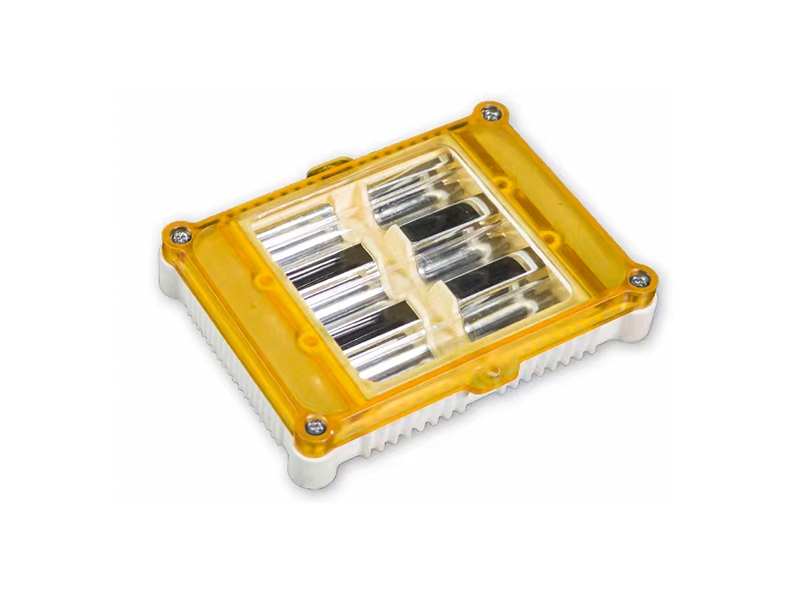
Far-UVC disinfection module designed for commercial and industrial integration.
For elevator and transportation equipment manufacturers, GMY also offers a range of 222nm Far-UVC lighting solutions that can be considered for different installation requirements.
What Should Buyers Consider When Choosing a 222nm Excimer Lamp?
For distributors, system integrators, and OEM equipment manufacturers, selecting a 222nm lamp requires more than comparing wattage and product prices.
The following considerations can help buyers evaluate different products more effectively.
Wavelength accuracy and spectral purity
Confirm that the light source operates at the intended 222nm wavelength and request complete spectral emission data. For occupied-space applications, the optical filter specification is particularly important.
UV irradiance and coverage
Check the irradiance at a specified measurement distance rather than comparing power ratings alone. The installation environment and required disinfection coverage should determine the appropriate output.
Service life and operating stability
Commercial equipment manufacturers need consistent performance and predictable maintenance requirements. Review rated lamp life, switching-cycle performance, operating temperature, and output stability.
Electrical and mechanical compatibility
OEM buyers should check input voltage, dimensions, heat management, installation methods, and control-system compatibility before selecting a module.
Compliance and documentation
Request applicable safety documentation, test reports, product certifications, and technical datasheets. Requirements may differ between North America, the European Union, and other target markets.
GMY's 222nm product range includes different configurations for commercial and industrial applications. For example, its 20±2W excimer disinfection module features DC 24V input, a UV output rise time of approximately 3 seconds to 90%, more than 200,000 switching cycles, and a rated service life exceeding 3,000 hours according to the published product specifications.
Buyers can review the GMY 222nm excimer disinfection module specifications for more technical information.
Why 222nm Excimer Lamps Are Gaining Attention in the Disinfection Market
The demand for advanced disinfection technology is being influenced by several practical considerations.
First, businesses increasingly want disinfection systems that can operate without interrupting normal activities. Technologies designed for occupied spaces are therefore attracting attention from healthcare operators, building managers, and commercial equipment manufacturers.
Second, chemical-free disinfection is an attractive option for facilities looking to reduce dependence on chemical consumables and avoid chemical residues. UV-based treatment uses physical energy rather than conventional chemical disinfectants, although it does not replace all cleaning and sanitation procedures.
Third, mercury-free light sources are becoming more relevant as businesses consider environmental requirements and product lifecycle management. KrCl excimer lamps offer an alternative to mercury-based UV-C sources, although their overall environmental impact still depends on manufacturing, energy consumption, and disposal.
Finally, advances in optical filtering, lamp design, and electronic control are helping manufacturers develop more application-specific Far-UVC equipment.
These factors make 222nm excimer lamps an important technology to watch in the development of next-generation disinfection systems.
Is 222nm Excimer Technology Ready to Replace Traditional Disinfection?
Not entirely. Although 222nm Far-UVC has significant potential, it should be viewed as a complementary disinfection technology rather than a complete replacement for traditional UV-C, ventilation, air filtration, or routine cleaning.
Different applications require different solutions. For example, conventional 254nm UV-C remains widely used in enclosed water-treatment systems and unoccupied-space disinfection equipment. Meanwhile, properly filtered 222nm Far-UVC may be more suitable for projects that require continuous operation in occupied indoor environments.
There are also practical challenges that manufacturers and buyers need to address, including initial equipment costs, exposure assessment, installation requirements, long-term performance validation, and regulatory compliance.
The future of Far-UVC will depend on how effectively these technical and commercial challenges are addressed. Manufacturers that can provide reliable products, accurate spectral data, and application-specific engineering support will be better positioned to serve this growing market.
GMY: 222nm Excimer Lamp Solutions for OEM and Industrial Applications
As a professional UV light source manufacturer, GMY Lighting Technology focuses on developing ultraviolet lighting products for industrial, commercial, and specialized applications.
GMY's 222nm Far-UVC product range includes excimer lamps and integrated disinfection modules designed for different equipment configurations and operating environments.
Key product advantages include:
- Multiple power configurations: Options including 15W, 20W-class modules, 75W, and 150W solutions for different application requirements.
- Mercury-free technology: KrCl excimer light sources provide an alternative to conventional mercury-based UV-C lamps.
- Flexible integration: Product configurations for air disinfection equipment, commercial fixtures, and OEM applications.
- Technical customization: Support for application-specific product configurations and equipment integration.
- Industrial applications: Solutions for healthcare, transportation, education, commercial buildings, and other disinfection projects.
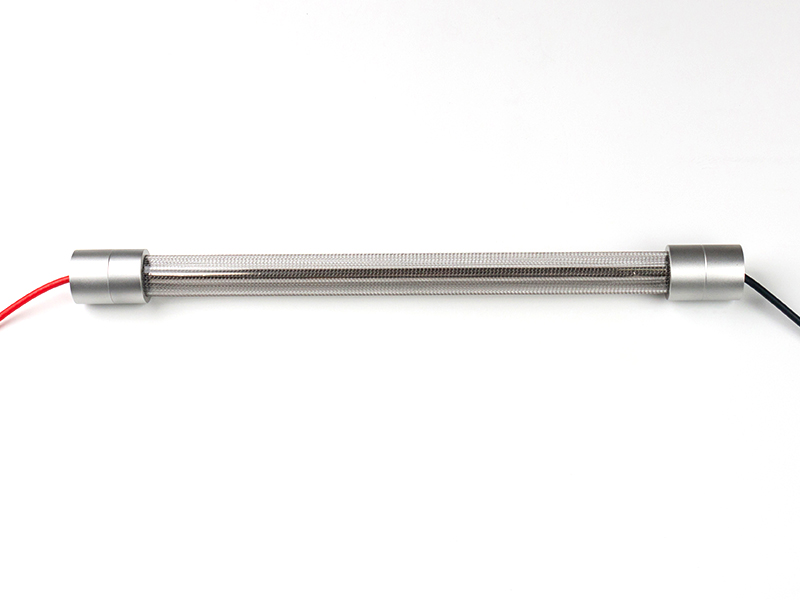
GMY Far-UVC excimer light source for professional disinfection equipment.
Whether you are developing a new air purification system, sourcing UV components for commercial equipment, or expanding your wholesale lighting product range, GMY can help you explore suitable 222nm excimer lamp configurations.
Explore the GMY 222nm Excimer Lamp product range or visit the UV disinfection solutions page to learn more about available technologies.
For OEM/ODM inquiries, customized specifications, or wholesale requirements, contact GMY to discuss your project and request detailed product information.
Frequently Asked Questions About 222nm Excimer Lamps
Are 222nm excimer lamps safe for occupied spaces?
Properly filtered and engineered 222nm excimer lamps can be designed for use in occupied spaces. However, safety depends on spectral purity, optical filtering, exposure limits, and installation conditions. They should not be assumed to be harmless without appropriate testing.
What is the difference between 222nm and 254nm UV lamps?
222nm lamps typically use KrCl excimer technology and produce Far-UVC radiation with limited penetration into biological tissues. Conventional 254nm lamps are commonly mercury-based and require stricter controls against direct human exposure.
Can 222nm Far-UVC kill airborne viruses and bacteria?
Yes. Laboratory research has demonstrated that 222nm Far-UVC can inactivate various airborne viruses and bacteria when sufficient UV doses are delivered. Actual performance depends on the microorganism, irradiance, exposure time, and environmental conditions.
Do 222nm excimer lamps contain mercury?
No. KrCl excimer lamps use krypton and chlorine-based excimer technology rather than mercury vapor, making them a mercury-free alternative to conventional mercury-based UV-C lamps.
Do 222nm excimer lamps produce ozone?
Ozone generation depends on the emission spectrum and lamp design. Properly engineered 222nm systems can be designed to minimize ozone generation. Buyers should request product-specific ozone test data rather than assume all UV lamps have identical emissions.
Where are 222nm excimer lamps commonly used?
Potential applications include hospitals, clinics, schools, offices, elevators, public transportation, commercial buildings, and integrated air purification equipment.
What should I check before purchasing a 222nm excimer lamp?
Important factors include wavelength accuracy, spectral filtering, UV irradiance, lamp lifespan, electrical specifications, exposure safety, product certifications, and compatibility with the intended equipment.
Does GMY provide customized 222nm excimer lamp solutions?
GMY offers 222nm excimer lamps and disinfection modules for commercial and industrial applications, with product configurations and OEM/ODM support for equipment manufacturers and distributors. Buyers can contact GMY to discuss specific technical requirements.