


How does a 172nm excimer lamp compare to other UV lamps?

A 172nm excimer lamp stands apart from mercury, LED, and other excimer lamps through its VUV output, high photon energy, instant on/off switching, mercury-free build, and shallow penetration. You will see how each option performs on technical specs, application fit, compliance, and cost. No single UV source wins everywhere; your process and regulations decide. GMY Lighting Technology Co., Ltd. supplies several excimer lamp types and offers this guide neutrally.
Key Takeaways
-
A 172nm excimer lamp produces high-energy vacuum UV light. It starts instantly and contains no mercury.
-
This lamp works well for surface curing and matting. It also generates ozone for air and water treatment.
-
The lamp lasts over 8000 hours and uses about 30% less energy. It simplifies compliance and reduces maintenance.
172nm Excimer Lamp Specs
Wavelength and Photon Energy
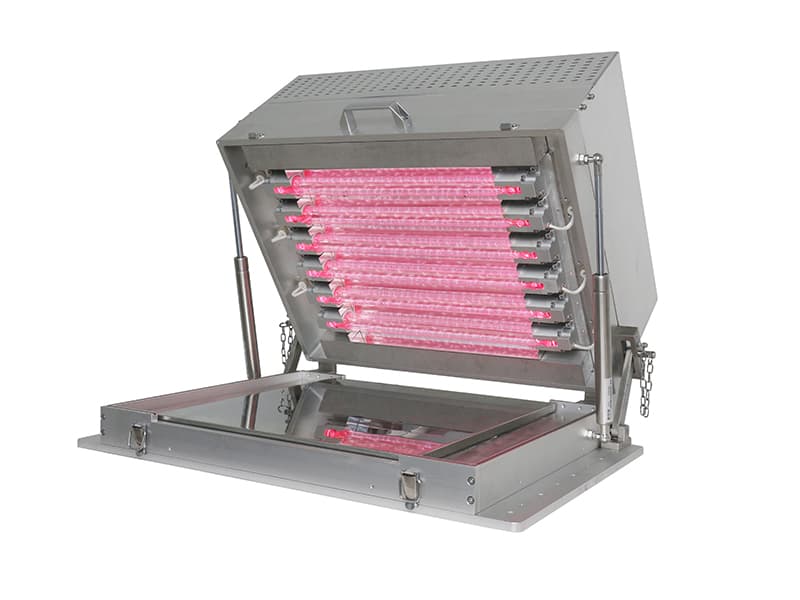
A 172nm excimer lamp emits in the vacuum ultraviolet (VUV) band, a region with wavelengths shorter than 200 nm. You get a 172 nm excimer output from a xenon (Xe₂) excimer discharge. The photon energy reaches 7.2 eV, which is high enough for demanding material processing. Low-pressure mercury lamps emit at 185 nm and 254 nm, so their photons carry less energy. Medium-pressure mercury uv lamps spread output across a broader spectrum. Other sources of uv and vuv radiation each occupy their own niche. The short wavelength of this excimer lamp radiation drives photochemistry that longer-wavelength uv sources cannot match.
The high photon energy matters for radical chemistry. A 172nm excimer lamp splits water and oxygen molecules directly at the surface. This step raises the quantum yield for hydroxyl radical (•OH) generation compared with low-pressure mercury lamps.
High photon energy (7.2 eV): Rapidly generates highly reactive oxygen species (O(³P), O(¹D)) and various radicals.
Benefits of Excimer Lamps
The benefits of excimer lamps start with efficiency and stability. These devices switch on and off instantly, so you avoid warm-up delays. Output stays stable over the lamp's life. The construction explains much of this behavior. A noble-gas-filled, coated quartz chamber holds the discharge, and the coating protects the envelope from the aggressive vacuum uv environment. You also gain extended lamp life and fewer replacements.
The table below summarizes the key photon energy figures.
-
172nm excimer lamp: 7.2 eV
-
Low-pressure mercury lamp: lower photon energy at 185 nm and 254 nm
Mercury lamps remain a mature, widely deployed option. They have decades of field history and broad availability. Excimer uv lamps simply offer a different trade-off: higher photon energy and instant control, with a narrower emission band. Your choice depends on the chemistry you need. For surface activation and thin-film work, the high energy of ultraviolet light from an excimer source often fits better. For bulk processes, established mercury-vapor lamps still serve well. Consider how each ultraviolet light source matches your process window before you commit.
Excimer Lamp Applications
Excimer Lamp Curing
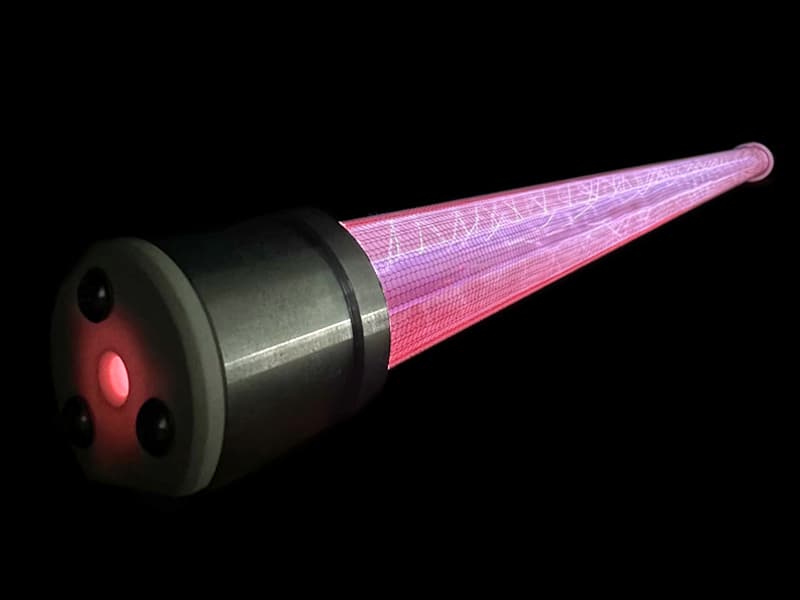
A 172nm excimer lamp deposits its energy in a very thin surface layer. Technical documentation on excimer lamp curing reports that 172 nm radiation polymerizes acrylate double bonds at the surface of a formulation layer, with only a limited depth of cure. The bulk beneath stays largely uncured. You can exploit this surface-dominant behavior. In printing and other photo-chemical processes, excimer lamp exposure produces a deep matting effect: the top layer crosslinks while the bulk remains soft. Formulators call this excimer matting, and it yields a deep matte coating with ultra-low gloss and no matting agents. The finish keeps ultra-low gloss after handling. Conventional matting uses fillers that scatter light; excimer lamp exposure achieves matting through chemistry. You get low gloss with a smooth hand. For wood panels and packaging, matting by this route creates low gloss surfaces that resist burnishing. Low gloss stays uniform across the panel. Low gloss depends on dose control, and low gloss repeatability improves with a stable lamp. Every matting step needs dose control, so matting quality tracks lamp stability. Matte surfaces show no glare, and surface gloss readings confirm the finish. A 172nm Excimer Photomodification Module combines lamp, power supply, and shielding for repeatable matting. Where you need a full cure through the film, pair surface matting with a deeper UV pass. A 172nm Excimer Module or a 172nm Excimer Lamp from GMY covers both roles.
Disinfection and Water Treatment
A phosphor coating can shift the 172nm output to UVC for disinfection. In air and water treatment, vacuum ultraviolet light acts as a reducer and a disinfectant. Ozone forms readily at this wavelength; a 10W 172nm lamp produces ozone at 0.1 ppm per minute in a closed environment, which suits small-scale air purification. The table below shows where each option fits best.
|
Lamp type |
Best fit |
|---|---|
|
172nm excimer |
Surface treatment, ozone generation, compact air units |
|
Low-pressure mercury |
High-power municipal water disinfection |
|
UV LED |
Point-of-use disinfection, instant switching |
|
Other excimer lamps |
Narrow-band gas-phase chemistry |
Mercury lamps remain the workhorse for large water plants. LED sources suit low-power, frequent-start duties. Other excimer lamps serve niche gas-phase work. Each uv sources family has a clear fit, and uv-curable formulations respond best to the shorter vuv output.
UV Safety and Compliance
Mercury-Free Operation
A 172nm excimer lamp contains no mercury. You avoid the disposal rules, spill response plans, and end-of-life reporting that mercury-containing lamps trigger under hazardous waste regulations. This simplifies compliance for production lines and for water or air treatment installations. The mercury-free design also removes the risk of mercury contamination in food packaging, medical device, and electronics workflows. You can document a mercury-free process more easily during audits.
The excimer lamp radiation itself still demands respect. Vacuum UV at this wavelength does not penetrate deeply, so shielding is straightforward. Enclose the lamp in a housing and interlock the access door. Operators then face no exposure during normal matting runs. A 172nm Excimer Module with integrated shielding keeps low gloss output repeatable while protecting staff. For matting lines, a 172nm Excimer Photomodification Module combines lamp, power supply, and enclosure in one unit.
Ozone and Operator Safety
Ozone generation is the main safety consideration. At 172 nm, oxygen splits and recombines into ozone, and a 10W lamp can produce ozone at 0.1 ppm per minute in a closed space. You must ventilate or exhaust enclosed volumes. Install ozone monitors in work areas and set alarm thresholds. Route exhaust away from intake air.
Excimer lamps switch off instantly, so you can stop uv output the moment a fault appears. This instant control supports safe matting and low gloss production. Train operators on lamp handling, because quartz envelopes are fragile. Replace damaged lamps before they affect matting quality or low gloss consistency. A documented safety routine protects both people and process.
Excimer Lamp Costs
Purchase Price
Upfront price varies widely across lamp families. A 172nm excimer lamp carries a higher initial cost than a standard low-pressure mercury tube, because the coated quartz chamber and noble-gas fill demand tighter manufacturing. Mercury-based lamps stay cheap to buy in volume. UV LED systems cost more at the module level, yet prices keep falling. Other excimer lamps sit in a similar range to xenon types. Treat purchase price as one line item, not the whole budget. A matting line that runs for years rarely wins on sticker price alone.
Operating and Maintenance Costs
Lamp life drives the long-term math. The table below compares the two main options.
|
Attribute |
Mercury-based lamps |
172nm xenon excimer lamps |
|---|---|---|
|
Lifespan |
Typically 2000–4000 hours |
Over 8000 hours (case example: 9000 hours) |
|
Replacement frequency |
Higher |
Lower |
|
Energy/operating cost |
Baseline |
About 30% lower energy consumption |
|
Maintenance cost |
Higher due to short life |
Reduced via long-life design and easy-replace modules |
A longer service interval cuts downtime on a matting line. Fewer swaps also mean less labor and less risk of a damaged quartz envelope. Energy savings of roughly 30% compound across a production year. Modular, easy-to-replace components keep matting output steady between services. A 172nm Excimer Module simplifies that swap further.
Specific price figures depend on your configuration, so request a quote rather than estimate. GMY Lighting Technology Co., Ltd. can help you match a lamp type to your application and budget, whether you run matting, curing, or disinfection.
A 172nm excimer lamp trades broad output for high photon energy, instant control, mercury-free compliance, and long life. Choose it for mercury-free surface curing and matting. Choose mercury for high-power water disinfection, LED for point-of-use uv, other excimer lamps for gas-phase work. For matting, matting lines, matting quality, matting consistency, matting output, matting runs, and matting budgets, GMY can match a lamp to your process.
FAQ
These quick answers cover the questions readers raise most often, including how a 172nm Excimer Module fits a production line.
What makes a 172nm excimer lamp different from a mercury lamp?
It emits vacuum uv at 172 nm with 7.2 eV photons, switches instantly, and contains no mercury. Mercury tubes emit at 185 nm and 254 nm with lower photon energy.
Can I use a 172nm excimer lamp for disinfection?
Yes. A phosphor coating shifts the uv output to UVC. Add shielding and dose control for air or water treatment, and monitor uv exposure.
How do I control ozone during operation?
Ventilate enclosed spaces and install ozone monitors. A 10W lamp produces ozone at 0.1 ppm per minute in a closed environment. Route uv exhaust away from intake air.